tags: - public-ready - export-bio - index
Two-Spotted Spider Mite
Overview
Two-spotted spider mite (Tetranychus urticae) is one of the most economically important mite pests in horticulture and protected cropping.
It is particularly important because of:
- explosive reproductive potential
- heat acceleration
- rapid hotspot formation
- webbing behaviour
- crop stress interaction
Identification
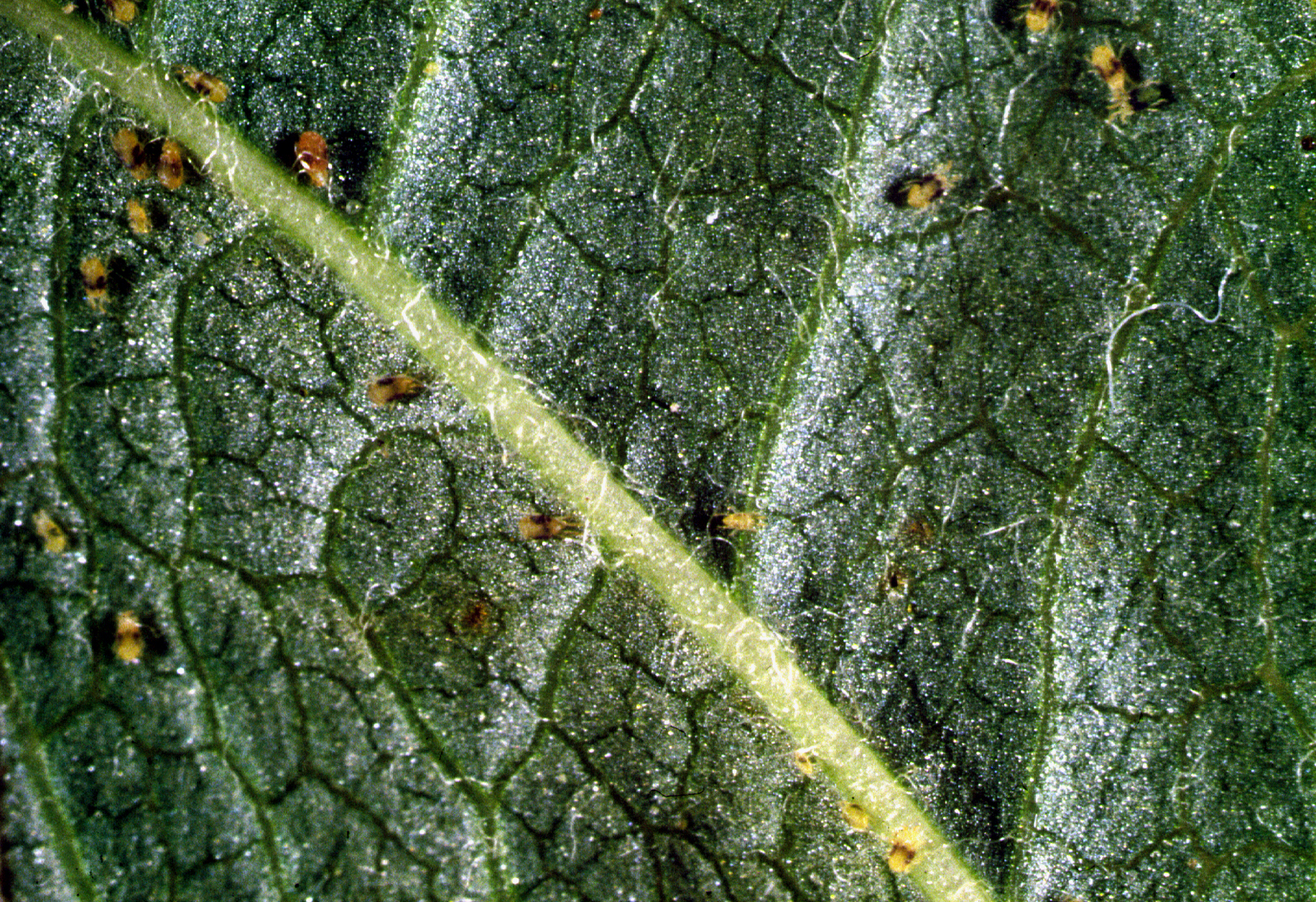
Two-spotted spider mites are tiny and are usually found on the undersides of leaves.
Adult females are approximately 0.4–0.5 mm long and may appear:
- pale green
- yellow-green
- orange
- brownish
- red during overwintering or diapause
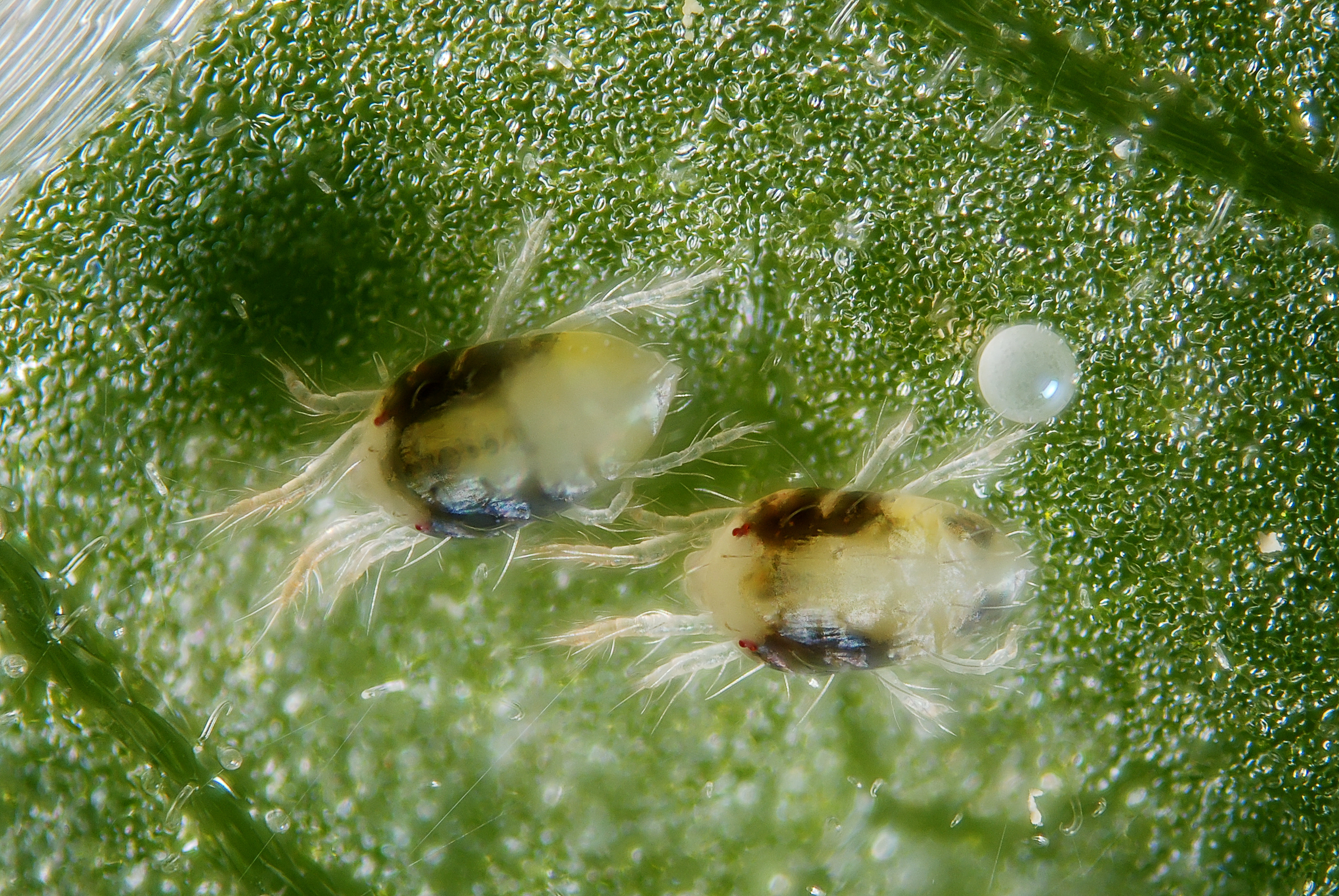
The two dark patches visible through the body are formed partly by internal gut contents and give the species its common name.
Useful identification signs include:
- two darker body patches
- pale, rounded eggs
- colonies on leaf undersides
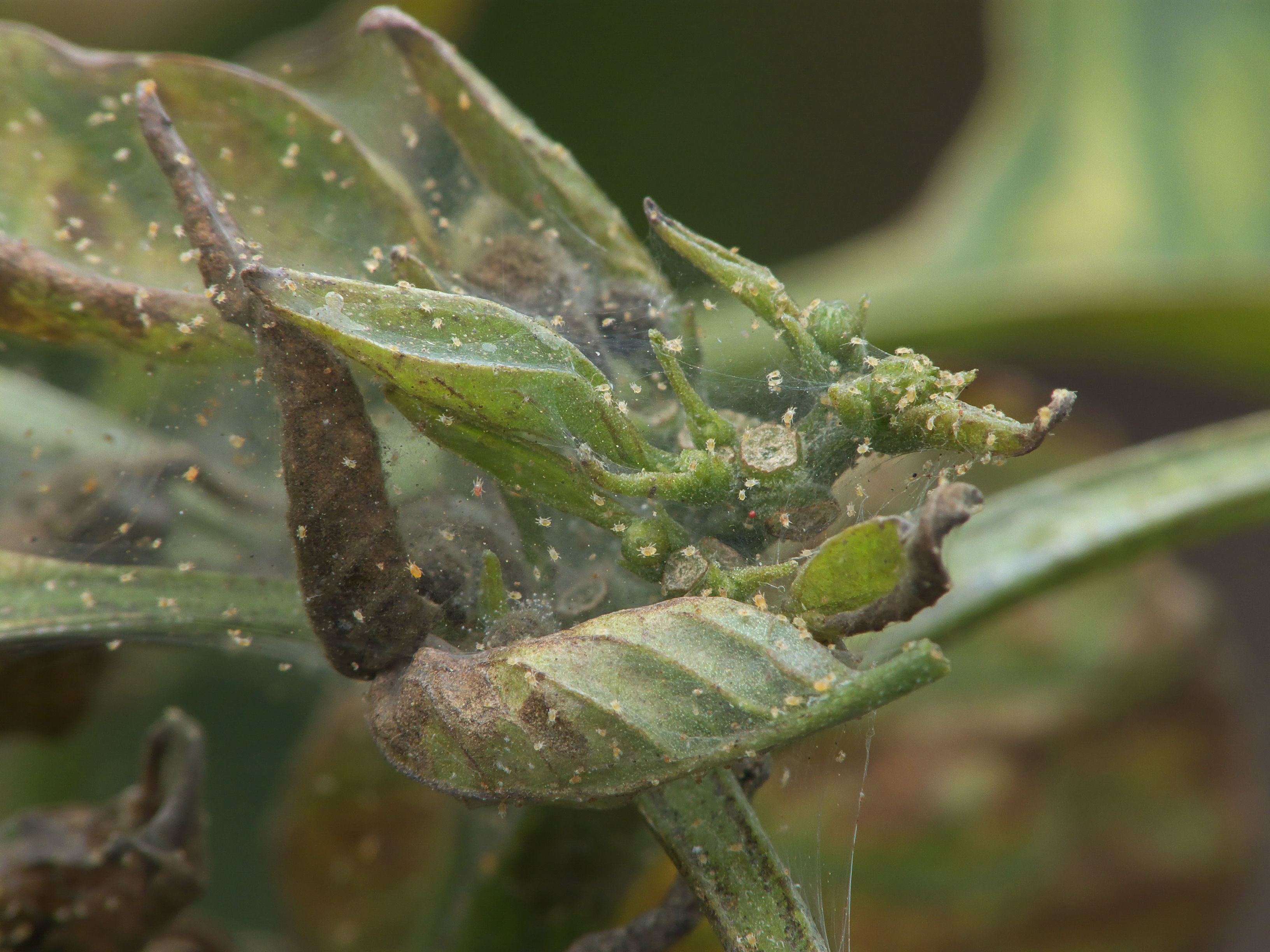
- fine silk webbing
- rapid movement when disturbed
- pale feeding stippling on the upper leaf surface
Colour alone is not reliable because adult females can change colour with season, host plant and physiological state.
Crop relevance
Important in:
- strawberries
- cucumbers
- peppers
- ornamentals
- soft fruit
- nursery systems
- protected vegetables
Life cycle
The life cycle includes:
- egg
- six-legged larva
- protonymph
- deutonymph
- adult
Both nymph stages pass through active feeding periods and resting periods before moulting.
Development accelerates strongly under warm conditions. In hot protected crops, generations can overlap and populations may increase very rapidly.
Females lay eggs mainly on leaf undersides and within established colonies.
Seasonal colour and overwintering
During active crop growth, females are commonly pale green or yellowish with two darker patches.
As day length shortens and temperatures fall, some females enter diapause and become orange-red.
These red overwintering females may shelter:
- in crop debris
- around posts and structures
- beneath bark
- in cracks
- around pot rims
- within protected plant material
Red colour does not automatically mean a different spider-mite species.
Symptoms
Typical symptoms include:
- stippling
- bronzing
- leaf speckling
- webbing
- canopy decline
- hotspot collapse
- reduced vigour
Damage progression
Two-spotted spider-mite outbreaks commonly develop through the following stages:
- Fine pale stippling appears on individual leaves.
- Small colonies establish on leaf undersides.
- Stippling becomes widespread and foliage begins to bronze.
- Leaves lose photosynthetic capacity and start to dry.
- Fine webbing develops between leaves and stems.
- Hotspots merge and sections of canopy decline.
- Severe infestations cause leaf loss, reduced vigour and crop collapse.
Webbing is a late warning sign. Control is much more difficult once colonies are heavily webbed.
Environmental drivers
Pressure strongly increases during:
- Hot dry weather
- low humidity
- plant water stress
- heatwaves
- dusty conditions
Biological control relevance
Predator choice depends on pest density, crop conditions and whether the programme is preventative or curative.
| Biological control | Best role |
|---|---|
| Phytoseiulus persimilis | Active colonies and curative hotspot control |
| Neoseiulus californicus | Preventative use and fluctuating low populations |
| Amblydromalus andersoni | Preventative use across a broad temperature range |
| Feltiella acarisuga | Dispersed colonies in humid protected crops |
Phytoseiulus persimilis is usually the main specialist predator for active two-spotted spider-mite colonies.
Generalist predators can help maintain preventative pressure, but severe outbreaks usually require rapid curative intervention.
Programme timing is critical because spider-mite populations can accelerate extremely quickly during hot weather.
Monitoring priorities
Inspect:
- lower and older leaves
- hot crop edges
- dry irrigation zones
- plants near heaters
- dusty foliage
- known historical hotspots
- newly introduced plant material
Record:
- live mites
- eggs
- predator numbers
- stippling severity
- webbing
- hotspot size
A hand lens is useful for distinguishing pest mites from predatory mites.
IPM considerations
Effective programmes focus on:
- early hotspot detection
- predator continuity
- humidity stability
- stress reduction
- frequent monitoring
- rapid intervention during heat events
Related BioWiki pages
- Spider Mites overview
- Spider Mite Identification Guide
- Spider Mite Host Plants
- Spider Mite Environment and Risk Factors
- Carmine Spider Mite
- Mites — UK Commercial Species Index
- Predator–Pest Ratio Modelling
Use this page alongside
Common host plants
Two-spotted spider mite has an exceptionally broad host range.
Important hosts include:
- Strawberry
- Cucumber
- Tomato
- Sweet Pepper
- Chilli Pepper
- Aubergine
- Rose
- Chrysanthemum
- Grapevine
- Blackberry
- Raspberry
- Blueberry
See the Spider Mite Host Plant Hub for a broader crop guide.