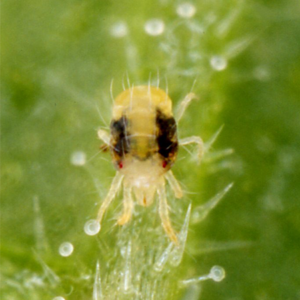
Spider Mites
Overview
Spider mites are one of the most important pests in protected horticulture.
They are especially common in:
- strawberries
- cucumbers
- tomatoes
- aubergines
- ornamentals
- roses
- soft fruit
- protected crops under stress
The most common species in protected crops is usually two-spotted spider mite.
Spider mites thrive when crops are:
- warm
- dry
- stressed
- dusty
- poorly monitored
They can move from small hotspots to crop-wide outbreaks very quickly.
Identification
Spider mites are tiny mites found mainly on the underside of leaves.
Look for:
- tiny moving mites
- pale eggs
- fine webbing
- speckled leaves
- bronzed foliage
- dry leaf patches
Early infestations are often missed because the first symptoms are subtle.
Damage symptoms
Typical damage includes:
- pale speckling
- silvering
- bronzing
- reduced photosynthesis
- leaf drying
- webbing in severe outbreaks
- crop stress and yield loss
Webbing is a late warning sign.
By the time webbing is obvious, the population is usually already high.
Life cycle
Spider mites reproduce quickly in warm conditions.
The life cycle includes:
- egg
- larva
- nymph stages
- adult
In warm protected crops, generations can turn over rapidly.
This means small hotspots can expand fast, especially during hot dry weather.
Conditions favouring spider mite
| Condition | Risk |
|---|---|
| Hot dry weather | Very High |
| Plant stress | High |
| Dry canopy | High |
| Dusty crops | Moderate–High |
| Poor airflow zones | Moderate |
| Recent pesticide disruption | High |
| Delayed monitoring | Very High |
Monitoring
Inspect:
- lower leaves
- older leaves
- warm crop edges
- dry bays
- stressed plants
- known hotspots
Use a hand lens where possible.
Do not only inspect the top of the crop.
Spider mites often begin low in the canopy.
Hotspot behaviour
Spider mites usually start in localised hotspots.
Common hotspot areas include:
- tunnel edges
- glasshouse edges
- dry ends of rows
- stressed plants
- near heaters
- dusty areas
- irrigation problem zones
The key is to find hotspots before they connect together.
Biological control strategy
Biological control is strongest when used early.
Common strategies include:
- preventative predatory mites
- hotspot releases
- corrective predators where active mite colonies are present
- maintaining suitable humidity where possible
- avoiding disruption of predator populations
Phytoseiulus-type predators are often used for active spider mite hotspots.
Preventative mite programmes may use other predatory mite species depending on crop and conditions.
Environmental strategy
Spider mite control is not just about releasing predators.
Good IPM also includes:
- reducing crop stress
- avoiding severe dry-down
- maintaining irrigation uniformity
- managing dusty conditions
- checking hot areas more often
- avoiding unnecessary disruptive sprays
Hot dry crop stress often creates the outbreak.
Common host plants
Spider mites affect many crops, including:
See the Spider Mite Host Plant Hub for the wider host range.
Spider Mite topic guide
Use these focused pages for more detail:
- Two-Spotted Spider Mite
- Spider Mite Identification Guide
- Spider Mite Host Plant Hub
- Spider Mite Environment and Risk Factors
- Spider Mites — UK Commercial Species Index
- Spider Mite biological control solutions
Related BioWiki pages
Key message
Spider mite outbreaks are usually won or lost at hotspot stage.
Find them early, correct the crop stress, protect predators and act before webbing appears.