tags: - public-ready - export-bio - index
Potato Aphid
Common names: Potato Aphid Scientific name: Macrosiphum euphorbiae
Overview
Potato aphid (Macrosiphum euphorbiae) is a relatively large aphid species associated with potatoes, tomatoes, ornamentals and protected crops.
It can cause feeding damage, honeydew contamination and may contribute to virus risk in some systems.
Identification
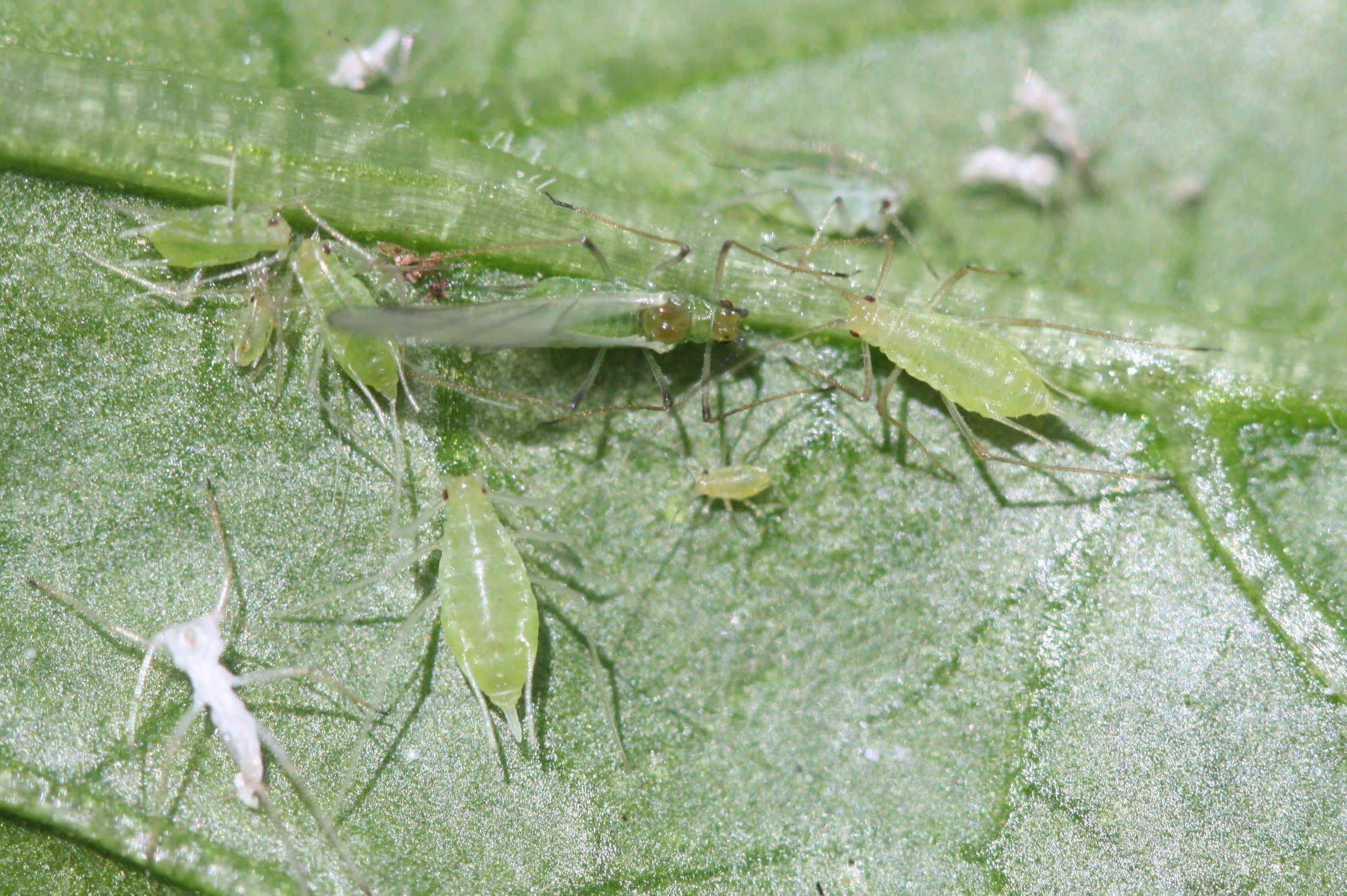
Potato aphids are among the largest aphid species found on horticultural crops. Colonies may contain both wingless adults (apterae) and winged adults (alatae), particularly when populations become crowded or host plants begin to deteriorate. Cast skins (exuviae) often accumulate around established colonies and are a useful sign that aphids have been feeding for some time, as shown in the photograph above.
Crop symptoms
- Leaf distortion
- Honeydew
- Sooty mould
- Reduced vigour
- Contamination of marketable crop
Host relevance
Important in:
- potatoes
- tomatoes
- ornamentals
- protected edible crops
- nursery stock
IPM relevance
Potato aphid should be monitored as part of broader aphid IPM programmes, especially where protected crops support continued population growth.
Biological control relevance
Useful biological control may include: