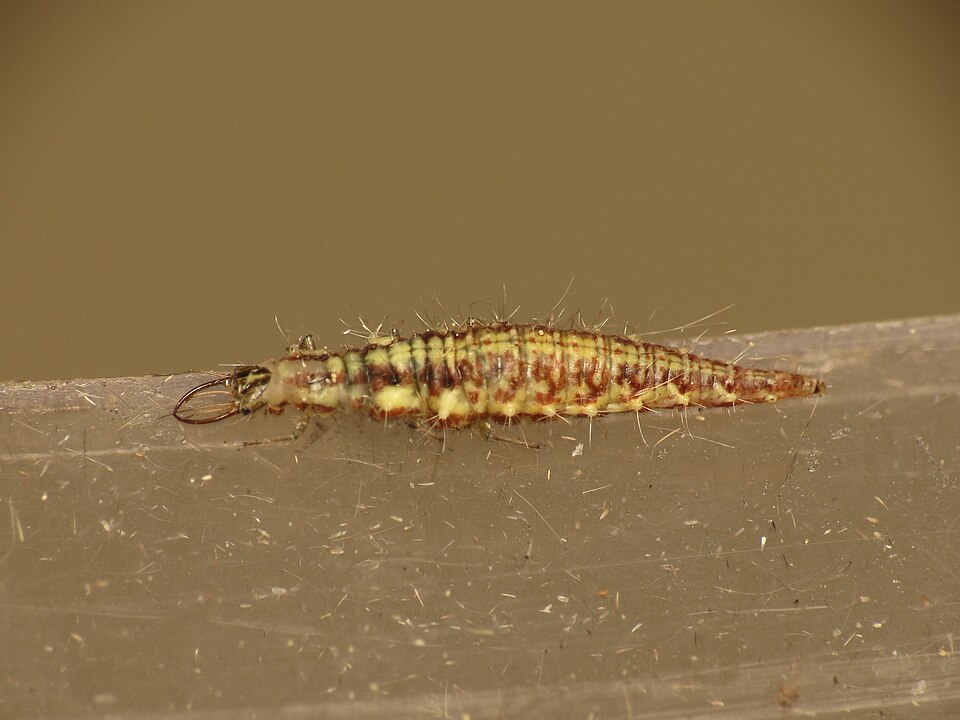
Chrysoperla carnea
Overview
Chrysoperla carnea is the most commonly used lacewing species in biological control programmes. It is valued for its ability to attack a wide range of soft-bodied pests and is particularly effective against aphids.
The larval stage is responsible for pest control and is commonly released into crops experiencing aphid pressure.
Type
Predatory lacewing.
Target Pests
Primary Targets
- Aphids
Secondary Targets
- Whitefly
- Thrips
- Mealybugs
- Small caterpillars
Identification
Adults are bright green lacewings with transparent wings.
Larvae are grey-brown predators with prominent sickle-shaped jaws.
Crops Commonly Used In
- Ornamentals
- Herbs
- Soft fruit
- Protected vegetables
Strengths
- Broad-spectrum predator
- Excellent aphid control
- Useful curative predator
- Compatible with many IPM programmes
Limitations
- Requires prey availability
- Less preventative than parasitoids
- Adults provide little direct pest suppression
Monitoring Establishment
Look for:
- Larvae within aphid colonies
- Feeding damage to prey
- Reduced aphid populations