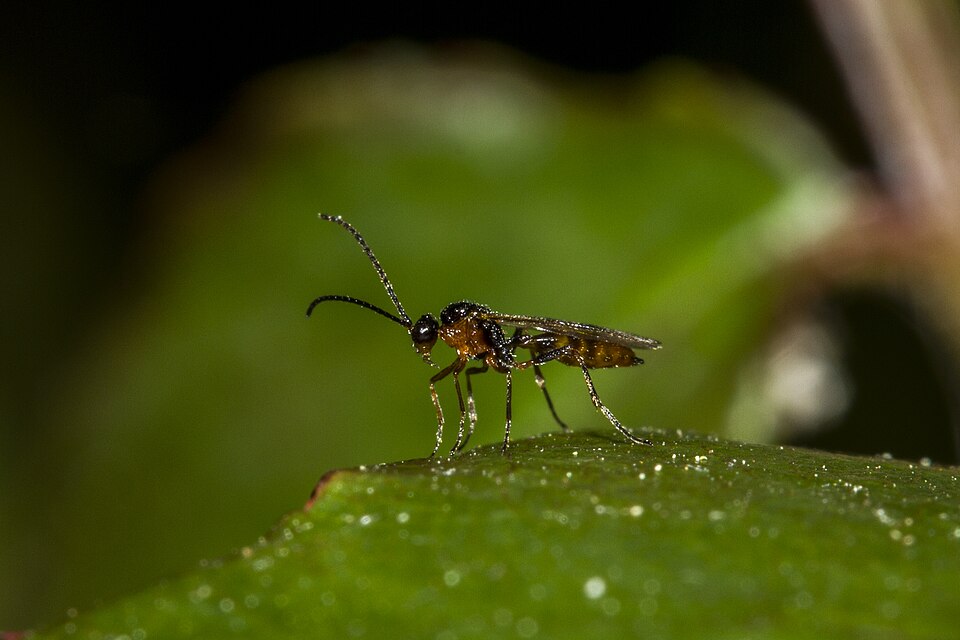
Aphidius ervi
Overview
Aphidius ervi is a parasitoid wasp used primarily against larger aphid species. It is an important component of many biological control programmes in protected crops, soft fruit and ornamentals.
Like other Aphidius species, it develops inside aphids and eventually produces characteristic aphid mummies.
Type
Parasitoid wasp.
Target pests
Primary targets
- Potato aphid
- Foxglove aphid
- Larger aphid species
Secondary targets
- Various other susceptible aphids
Identification
Adults are slender dark parasitoid wasps.
Parasitised aphids become swollen, bronze-coloured mummies before adult emergence.
Why Aphidius ervi is Important
Some aphid species are too large for Aphidius colemani to control effectively.
Aphidius ervi fills this gap and is often used alongside other parasitoids to provide broader aphid coverage.
Environmental Requirements
Temperature
Best performance under stable protected-crop conditions.
Light
Good light levels improve host searching activity.
Host Availability
Requires suitable aphid hosts for establishment.
Crops Commonly Used In
- Strawberries
- Ornamentals
- Peppers
- Herbs
- Soft fruit
Strengths
- Excellent for larger aphid species
- Strong searching behaviour
- Easy monitoring through mummy formation
- Compatible with predator programmes
Limitations
- Host-specific performance
- Less effective against some smaller aphid species
- Sensitive to pesticide residues
Works Well With
Common Reasons for Failure
Wrong aphid species
Not all aphids are equally suitable hosts.
Late introductions
Large established colonies are harder to suppress.
Chemical disruption
Broad-spectrum pesticides can reduce parasitoid populations.
Practical IPM Strategy
- Identify aphid species.
- Match parasitoid to host.
- Introduce early.
- Monitor mummy formation.
- Combine with predators where needed.