
Leafminer
Overview
Leafminers are insects whose larvae feed within leaves, between the upper and lower leaf surfaces.
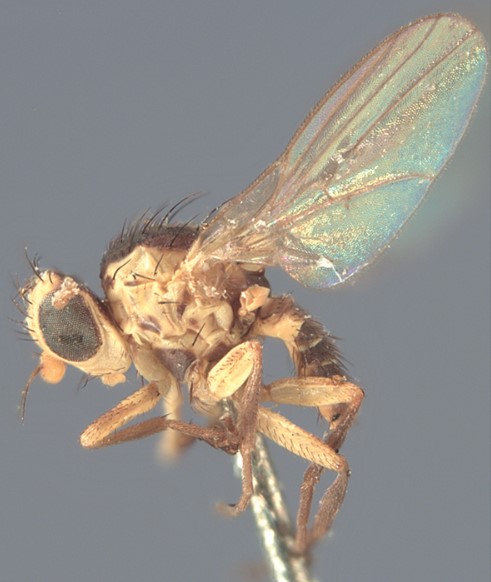
In commercial horticulture, the most important leafminers are usually small agromyzid flies, including several Liriomyza and Phytomyza species. Their larvae produce visible mines that reduce photosynthetic area, weaken plants and damage crop appearance.
The name “leafminer” describes a feeding habit rather than one single pest species.
Leaf-mining damage may also be caused by moth larvae such as Tuta absoluta, but these pests differ in biology, monitoring and management.
Why leafminers matter
Leafminers are especially important in crops where foliage forms part of the marketable product.
They can cause:
- visible serpentine or blotch mines
- reduced leaf quality
- reduced photosynthetic area
- premature leaf ageing
- leaf collapse under heavy pressure
- contamination of propagation and nursery stock
- rejection of ornamental and leafy crops
A small number of mines may be commercially significant in herbs, lettuce and ornamental crops even where plant vigour is not yet seriously affected.
Main leafminer groups
Important horticultural leafminers include:
Agromyzid leafminer flies
These include species within genera such as:
- Liriomyza
- Phytomyza
- Chromatomyia
Their larvae are pale, legless maggots that feed within leaves.
Allium leafminer
Allium leafminer attacks:
- leeks
- onions
- garlic
- other allium crops
Larvae may mine leaves and continue into stems and bulbs.
Tomato leafminer moth
Tuta absoluta is a moth rather than a leafminer fly.
Its larvae can damage:
- tomato leaves
- stems
- flowers
- fruit
It should be treated as a separate pest within monitoring and IPM programmes.
Identification
Adult agromyzid leafminers are tiny flies, often dark with yellow markings.
Larvae are:
- pale
- legless
- hidden inside the leaf
- visible through fresh mines in some cases
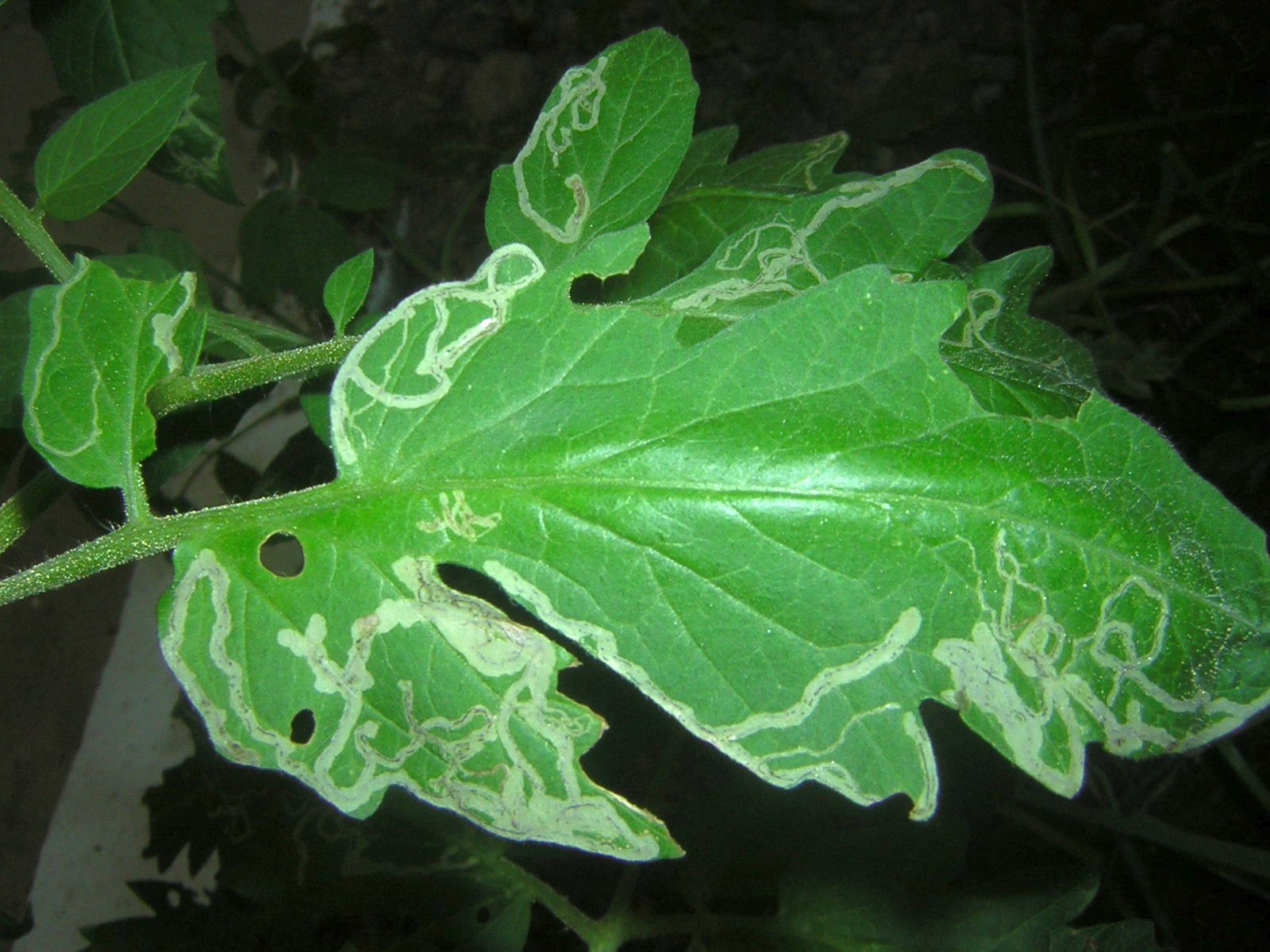
Typical signs include:
- winding serpentine mines
- blotch mines
- pale feeding trails
- dark frass lines within mines
- adult feeding punctures
- small exit holes
- pupae on leaves or in the growing medium
See the detailed guide:
Life cycle summary
The typical agromyzid leafminer life cycle includes:
- adult fly
- egg inserted into leaf tissue
- larva feeding within the leaf
- pupa
- adult emergence
Female flies also puncture leaves for feeding.
Warm protected crops may support overlapping generations and continuous adult activity.
See:
Damage symptoms
Typical damage includes:
- narrow winding mines
- broad blotch mines
- pale trails
- dark frass inside mines
- leaf yellowing
- reduced leaf quality
- premature leaf loss
- leaf collapse under heavy attack
Mine shape can help indicate the likely pest group, but species confirmation may require adult examination or specialist diagnosis.
See:
Conditions favouring leafminer
| Condition | Risk |
|---|---|
| Warm protected crops | High |
| Continuous cropping | High |
| Young soft foliage | High |
| Incoming infested plants | High |
| Weed hosts | Moderate–High |
| Dense canopy | Moderate |
| Poor monitoring | High |
| Disrupted parasitoids | High |
Long-season and continuously cropped systems allow populations to persist between crop batches.
See:
Monitoring
Inspect:
- young leaves
- new growth
- upper canopy
- lower and middle leaves
- crop edges
- incoming plant material
- weeds and volunteer plants
Look for:
- fresh mines
- larvae inside mines
- adult feeding punctures
- dark frass lines
- exit holes
- pupae
- adult flies on yellow sticky traps
Fresh, narrow mines are usually more useful for monitoring active populations than old, dried mines.
Sticky traps help track adult movement, but leaf inspection is required to confirm larval activity.
Biological control
Leafminer programmes depend heavily on parasitoid conservation and early detection.
Diglyphus isaea
Diglyphus isaea is an important parasitoid used against several agromyzid leafminer species.
It attacks larvae within mines and may also kill additional larvae through host feeding.
Naturally occurring parasitoids
A range of parasitoid wasps may contribute to suppression.
See:
Generalist predators
Generalist predators may consume adults, eggs or exposed stages, but they are normally supporting agents rather than the foundation of leafminer control.
Relevant pages include:
Practical IPM approach
Successful leafminer management usually combines:
- inspection of incoming plants
- frequent checks for fresh mines
- yellow sticky-trap monitoring
- removal of severely mined leaves where appropriate
- protection of parasitoids
- weed and volunteer-host control
- avoiding unnecessary broad-spectrum pesticides
- preventing movement of infested plant material
- recording hotspots and repeated problem areas
Removing mined leaves is most useful before larvae complete development and emerge.
Leaves should be removed carefully so that parasitoids are not unnecessarily discarded where parasitism is already established.
Common host plants
Leafminers affect a wide range of vegetables, herbs, ornamentals and allium crops.
Important linked hosts include:
Protected vegetables
Leafy crops and herbs
Allium crops
Brassicas and field vegetables
Ornamentals
See the complete guide:
Commercial leafminer species
The main species and pest groups differ in host range, regulatory importance and crop relevance.
Current BioWiki species pages include:
- Tomato Leafminer Fly
- American Serpentine Leafminer
- Pea Leafminer
- Chrysanthemum Leafminer
- Allium Leafminer
- Tomato Leafminer / Tuta absoluta
See the species hub:
Leafminer topic guide
Use these focused pages for more detail:
- Leafminer Identification Guide
- Leafminer Host Plants
- Leafminer Environment and Risk Factors
- Leafminer Life Cycle
- Leafminer Damage Symptoms
- Commercial Leafminer Species
- Leafminer biological control solutions
Related BioWiki pages
Related tools
Key message
Leafminer control is strongest when fresh mines are detected early and parasitoid populations are protected.
Monitor new growth, track adult activity and respond before mines become widespread across the crop.