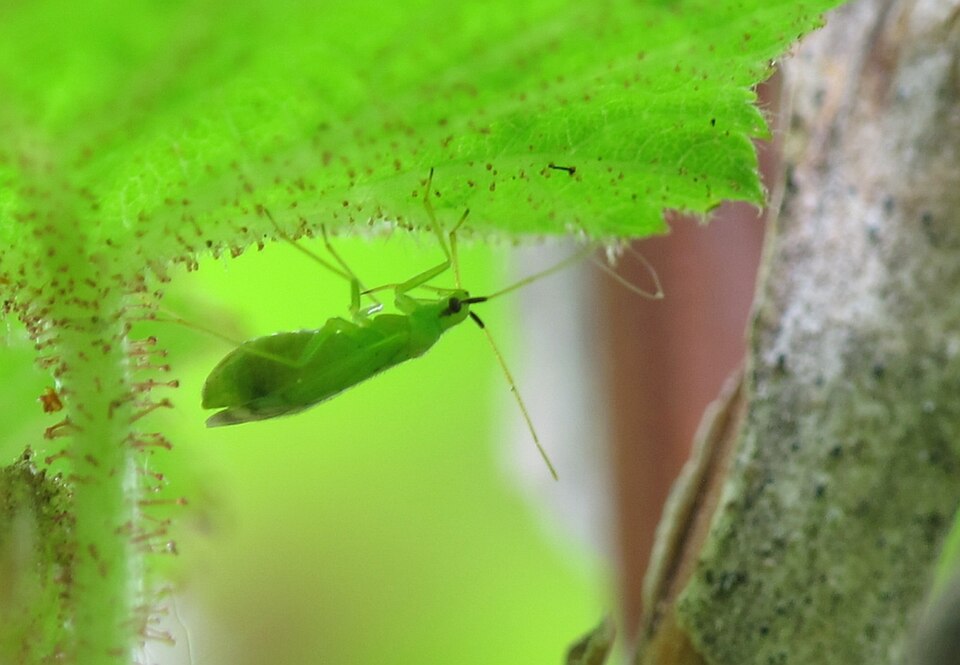
Macrolophus pygmaeus
Overview
Macrolophus pygmaeus is a predatory mirid bug widely used in Mediterranean and protected-crop biological control programmes. It is a highly effective generalist predator capable of attacking whitefly, aphids, caterpillars, spider mites and several other pest groups.
Unlike many specialist beneficials, Macrolophus can establish long-term populations within crops and provide broad-spectrum pest suppression.
Type
Predatory bug.
Target Pests
Primary Targets
- Whitefly
- Whitefly eggs
- Whitefly larvae
Secondary Targets
- Aphids
- Spider mites
- Caterpillar eggs
- Small caterpillars
- Leafminer larvae
Identification
Adults are green predatory bugs approximately 3–5 mm long.
Nymphs are bright green and wingless.
Both adults and nymphs are predatory.
Why Macrolophus is Important
Macrolophus is capable of providing broad-spectrum pest control across multiple pest groups simultaneously.
In long-season crops it can become a dominant beneficial species and significantly reduce reliance on corrective treatments.
Environmental Preferences
Temperature
Optimal:
- 20–30°C
Light
Benefits from good light levels.
Crop Duration
Particularly valuable in long-duration crops where populations have time to establish.
Crops Commonly Used In
- Tomatoes
- Aubergines
- Ornamentals
- Protected vegetables
Strengths
- Broad prey range
- Long-term establishment
- Strong whitefly control
- Excellent searching behaviour
- Multiple pest targets
Limitations
- Slow establishment
- Requires early introduction
- Can feed on plants when prey is scarce
Works Well With
- Encarsia formosa
- Eretmocerus eremicus
- Amblyseius swirskii
Monitoring Establishment
Look for:
- Green nymphs
- Adult mirid activity
- Reduced whitefly populations
- Predator presence around growing points
Common Questions
Does Macrolophus feed on plants?
Yes. It is partly omnivorous and may feed on plants when prey is scarce.
Is it preventative or curative?
Primarily preventative because establishment takes time.
Why is it popular in tomatoes?
Tomato crops provide an excellent environment for long-term population development.