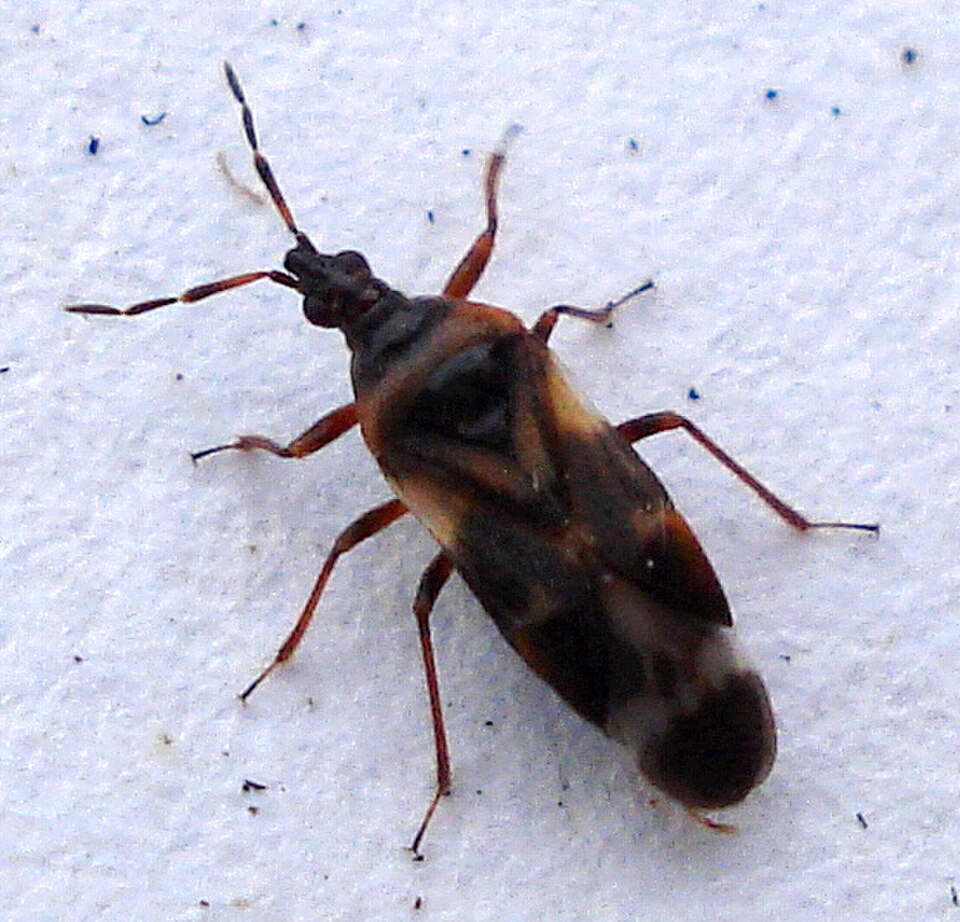
Anthocoris spp.
Overview
Anthocoris are predatory bugs widely used in biological control programmes, particularly against pear sucker and other psyllid pests. They are active hunters with strong searching behaviour and are capable of feeding on multiple prey types throughout their life cycle.
Several Anthocoris species occur naturally in UK orchards and outdoor crops, where they play an important role in regulating pest populations.
Type
Generalist predatory bug.
Target pests
Primary targets
- Pear sucker (Cacopsylla pyri)
- Psyllids
Secondary targets
- Aphids
- Leafminer larvae
- Caterpillar eggs
- Small caterpillars
- Whitefly eggs
- Other soft-bodied insects
Identification
Adults are small black-and-white predatory bugs approximately 3–4 mm long.
Nymphs are wingless and pale brown to orange.
Both adults and nymphs are predatory.
Why Anthocoris is Important
Anthocoris is one of the most important biological control agents used against pear sucker.
Unlike many specialist natural enemies, Anthocoris can survive on a range of prey species and continue hunting even when pear sucker numbers fluctuate.
This flexibility makes it valuable in integrated orchard IPM programmes.
Environmental Requirements
Temperature
Performs well under typical outdoor growing conditions.
Humidity
Generally tolerant of normal orchard and outdoor crop conditions.
Crop Structure
Benefits from complex crop canopies where prey populations develop.
Crops Commonly Used In
- Pears
- Apples
- Ornamentals
- Outdoor soft fruit
Strengths
- Excellent psyllid predator
- Strong searching behaviour
- Multiple prey species accepted
- Suitable for outdoor use
- Compatible with many IPM programmes
Limitations
- Requires prey availability
- Slower establishment than some preventative systems
- Less commonly used in protected crops
- May require time to build populations
Works Well With
Common Reasons for Failure
Introduced Too Late
Large established pest populations are harder to suppress.
Lack of Alternative Prey
Populations may struggle where prey is absent for extended periods.
Chemical Disruption
Broad-spectrum insecticides can reduce predator numbers.
Practical IPM Strategy
- Monitor pear sucker populations regularly.
- Encourage early establishment.
- Maintain biodiversity where possible.
- Minimise disruptive pesticide use.
- Combine with other natural enemies where appropriate.