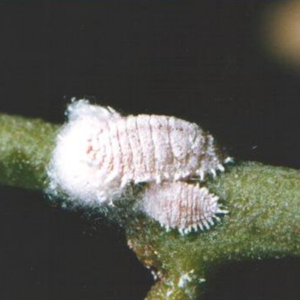
Mealybug
Overview
Mealybugs are sap-feeding insects that thrive in warm sheltered protected crops.
They are especially problematic in: - ornamentals - citrus - poinsettia - vines
They often establish unnoticed deep inside dense canopy.
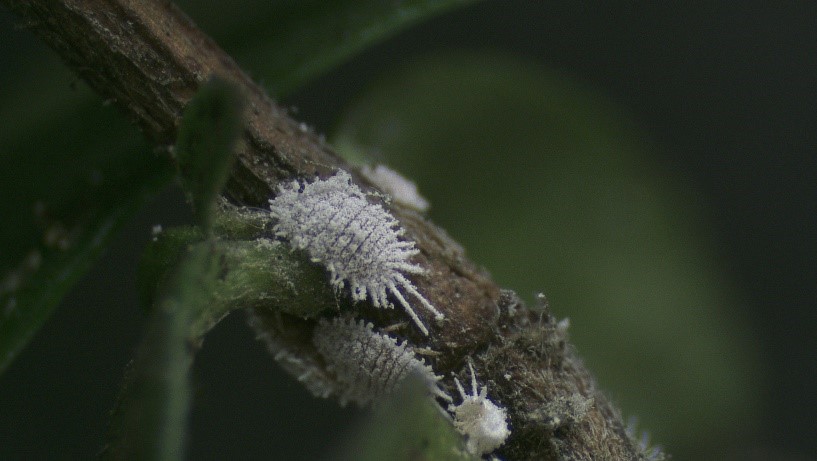
Identification
Typical signs: - white waxy insects - cotton-like masses - sticky honeydew - sooty mould - hidden stem colonies
Often found: - around stem junctions - beneath leaves - inside dense growth
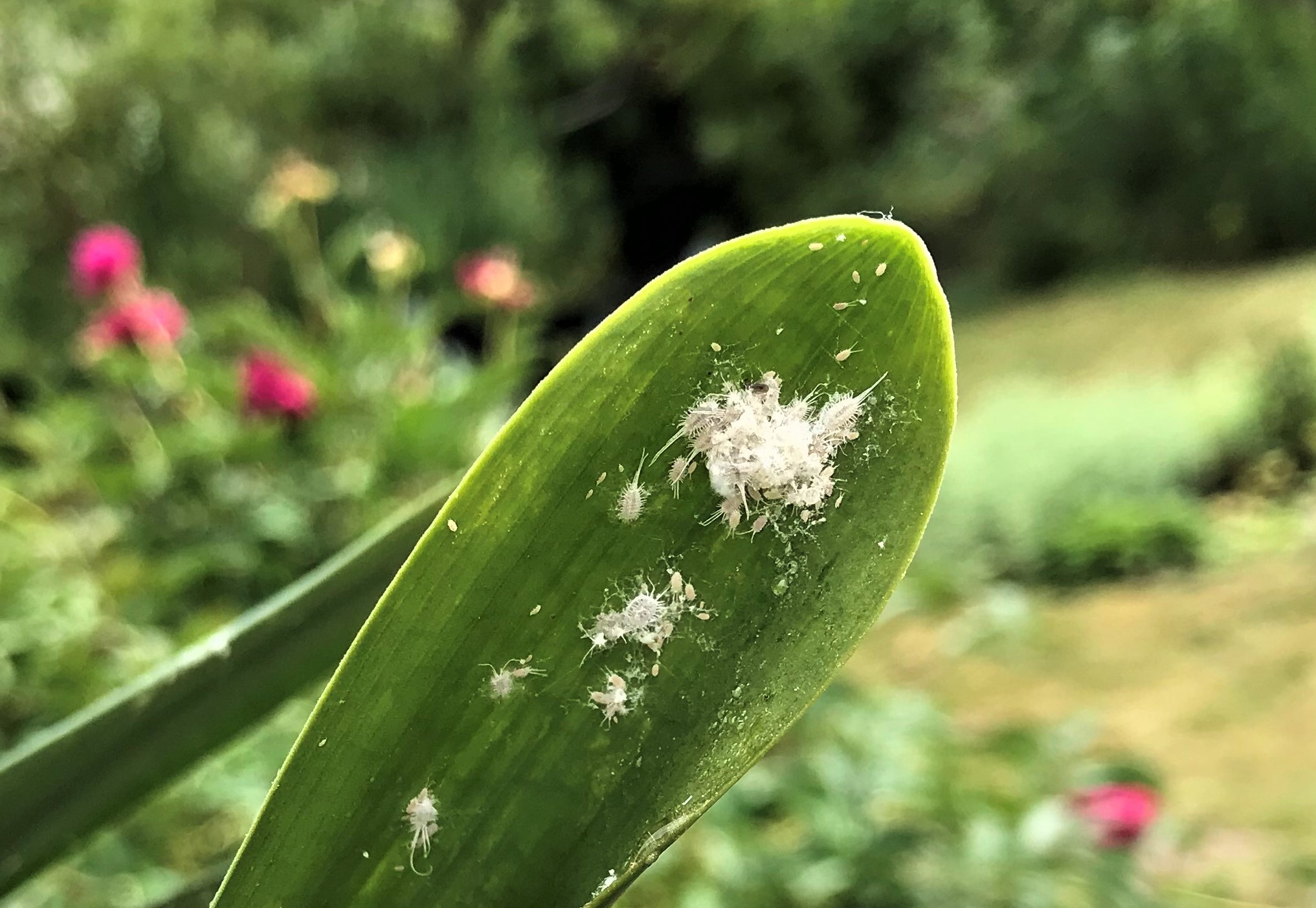
Conditions favouring mealybug
| Condition | Risk |
|---|---|
| Warm protected crops | High |
| Dense sheltered canopy | High |
| Poor airflow | Moderate–High |
| Long-season crops | High |
Monitoring
Inspect: - stem junctions - hidden canopy - lower leaves - sheltered warm areas
Honeydew and ants can be warning signs.
IPM approach
Useful strategies:
- early hotspot removal
- biological continuity
- canopy opening
- quarantine of incoming plants
- reducing hidden reservoirs
- using Cryptolaemus montrouzieri against established colonies
- using Chrysoperla carnea against exposed young stages where appropriate
Common host plants
Mealybugs are especially important on:
See the Mealybug host-plant guide for production risks and inspection advice.
Mealybug topic guide
Use these focused pages for more detail:
- Identification and similar pests
- Host plants and high-risk crops
- Environment, season and outbreak risk
- Root Mealybug
- Biological control solutions
Key message
Mealybug management becomes extremely difficult once colonies establish deep inside the crop.