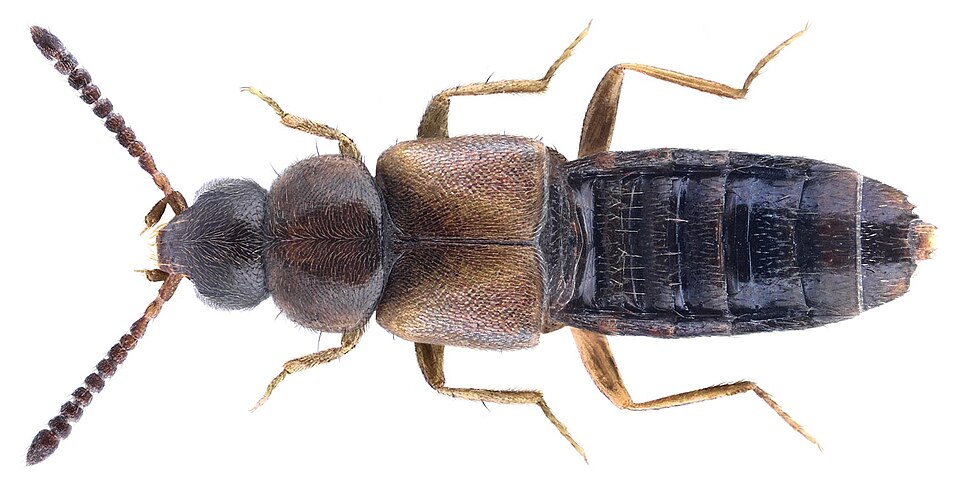
Atheta coriaria
Overview
Atheta coriaria is a predatory rove beetle used in biological control programmes against sciarid flies, shore flies and other substrate-associated pests.
Both adults and larvae are predatory and actively search through growing media for prey.
Type
Predatory rove beetle.
Target pests
Primary targets
- Sciarid fly larvae
- Fungus gnat larvae
Secondary targets
- Shore fly larvae
- Thrips pupae
- Small soil-dwelling pests
Identification
Adults are dark brown beetles approximately 3–4 mm long.
They are highly mobile and often seen moving rapidly across substrate surfaces.
Larvae are elongated and predatory.
Why Atheta is Important
Many biological programmes focus on above-ground pests.
Atheta provides active predation in the substrate and complements soil predatory mites and nematodes.
Environmental Requirements
Moisture
Prefers evenly moist growing media.
Temperature
Performs well under typical protected-crop temperatures.
Habitat
Benefits from stable substrate environments.
Crops Commonly Used In
- Ornamentals
- Herbs
- Lettuce
- Strawberries
- Young plants
Strengths
- Active predator
- Both adults and larvae are beneficial
- Excellent soil pest hunter
- Works well with other soil biologicals
- Long-term establishment possible
Limitations
- Less effective in dry substrates
- Works best preventatively
- Can take time to establish
Works Well With
Common Reasons for Failure
Dry growing media
Reduces activity and survival.
Heavy infestations
May require additional biological support.
Poor distribution
Can leave untreated hotspots.
Practical IPM Strategy
- Introduce early.
- Maintain suitable substrate moisture.
- Combine with predatory mites.
- Use nematodes when pressure increases.
- Monitor adult sciarid fly activity.